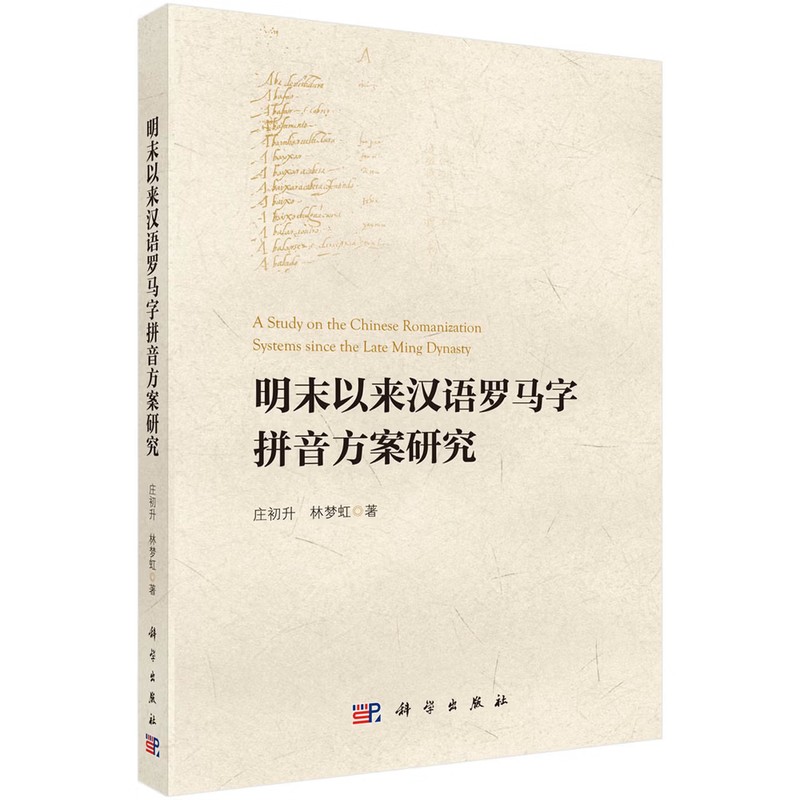
内容简介
庄初升教授与学生林梦虹博士合作的《明末以来汉语罗马字拼音方案研究》一书近日由科学出版社出版。全书55万字。著名语言学家、美国爱荷华大学教授柯蔚南(W. South Coblin)先生作序。
该书通过对明末以来西方人编写的上百种珍藏于国内外大学图书馆、教会档案馆的汉语罗马字拼音文献进行全景式考察和综合性比较,分析几十种罗马字拼音方案所反映的明清南北官话和南方多种方言的语音系统及音系性质,梳理国语罗马字、拉丁化新文字及《汉语拼音方案》的来龙去脉,观照“字母之路”背后的近代中西文化交流。该书在中西文化交流和文明互鉴的大背景下考察明末以来西方人创制各类汉语罗马字拼音方案的缘由、活动、成就和特点,可读性强,对汉语语言学研究、国际中文教育研究、近代中西文化交流史研究的学者以及有兴趣的普通读者,具有重要的参考价值。
该书是2013年国家社科基金项目的优秀结项成果。浙江大学文科精品力作出版资助计划及林华勇教授主持的国家社科基金重大项目“清末民国汉语五大方言比较研究及数据库建设”(22&ZD297)资助本书出版。
目 录
Preface
序
第一章 绪论
第二章 明末清初的南方汉语罗马字拼音方案
第一节 耶稣会官话拼音方案的创制
第二节 耶稣会官话拼音方案的影响
第三节 多明我会菲律宾闽南方言拼音方案
第三章 鸦片战争以前的南方汉语罗马字拼音方案
第一节 官话
第二节 闽南方言
第三节 粤语
第四章 鸦片战争以后的吴语罗马字拼音方案
第一节 上海话
第二节 宁波话
第三节 其他吴语
第五章 鸦片战争以后的闽语罗马字拼音方案
第一节 福建闽南方言
第二节 台湾闽南方言
第三节 潮汕方言、海南方言
第四节 闽东方言、兴化方言
第五节 闽北方言
第六章 鸦片战争以后的粤语罗马字拼音方案
第一节 广州话(上)
第二节 广州话(下)
第三节 其他粤语
第七章 鸦片战争以后的客家方言罗马字拼音方案
第一节 新安话
第二节 混合腔客家方言(上)
第三节 混合腔客家方言(下)
第四节 长汀话
第五节 印尼客家方言
第六节 北婆罗洲客家方言
第八章 鸦片战争以后的南方官话罗马字拼音方案
第一节 南京官话
第二节 西南官话
第九章 鸦片战争以后的北方官话罗马字拼音方案
第一节 山东官话
第二节 河北官话
第三节 热河官话
第四节 北京官话
第五节 关于“官话罗马字标准系统”
第十章 余论
参考文献
后记
Preface
It is a general characteristic of certain academic disciplines, and especially those belonging to the social sciences, that they normally advance in sedate, measured steps. Data are slowly and painstakingly accumulated; and when they reach critical mass this yields hypotheses which can then be published, examined by others, and tested for validity. The philological sciences, and historical linguistics in particular, may be classed among fields of this type. However, now and again the stone is rolled away, revealing the entrance to an as yet unexplored passage. Curious and intrepid researchers kindle their torches and sally forth into the darkness of the unknown. And these efforts are then rewarded by the discovery of seemingly endless series of passages, chambers, and galleries, filled with gleaming treasures of splendid and unimaginable rarity and beauty. When this happens, the hitherto placid mien of the field is changed forever, and a new scholarly domain is born where none existed before.
Some sixty years ago students in the West who were beginning their Sinological training were frequently aware that the larger academic libraries held older works dealing with spoken Chinese language, usually identified simply as Mandarin. These included grammars, textbooks, dictionaries, chrestomathies, etc. and dated from the early twentieth and mid to late nineteenth centuries. They utilized archaic and frequently impenetrable romanizations, and the types of speech they recorded often differed markedly from what was being taught daily in the current Chinese language classes. If shown to one's teachers, they immediately cautioned that no one talks that way,, nobody would normally say that, etc. In some of the best libraries there were also works that dated from the early to pre-nineteenth centuries; but these were mostly locked away in rare book collections, and their existence was seldom known of or cared about by the students. One had more than enough to do for one's regular language classwork, without concerning oneself with these dusty, antiquated arcana. Additionally, there were also sometimes old books dealing with dialects. Only a very small number of students even looked at these. If one were genuinely interested in learning other, non-standard or non-Mandarin varieties of Chinese, then one sought recourse to modern textbooks, not out-of-date ones.
Later, when more advanced students went abroad to Taiwan or Hong Kong, which is where one could go in those days for practical language training, one again noted that the types of Modern Standard Chinese spoken both inside and outside the language-teaching centers were not represented in the older works alluded to above. And if one wanted to study Cantonese, Taiwanese, or Hakka, for example, one used modern materials compiled specifically for this purpose. The older works were sometimes available as pirated reprints sold in specialty bookshops, but only inveterate bibliophiles looked at such things, let alone acquired them.
This, then, was the general picture in the mid-twentieth century among Westerners who studied Chinese language. China, for its part was in the throes of political unrest during this period, and overt or undue concern with Western books in general was neither feasible nor very safe then.
Starting approximately in the mid-1980's and advancing into the '90's, this picture changed significantly, for it became increasingly clear that pre-modern romanized texts served as both synchronic and diachronic windows on the actual pronunciation of various types of Chinese, beginning in the sixteenth century and reaching down to the early twentieth. Traditionally, Chinese historical phonology had been for the most part an abstruse and arcane field, in which abstract sound classes, embodied in rime books, rime tables, and other such sources, were extricated and then assigned hypothetical phonetic values, often differing substantially from one practitioner of the discipline to another. Now, however, recent and penultimate stages of Chinese phonological history could be viewed directly and clarified as never before. As a result of these developments, the field of romanized text analysis has burgeoned exponentially in the past few decades, with new sources constantly coming to light and new analyses of them appearing in tandem with each discovery. Staying abreast of developments in this innovative discipline has accordingly become an increasingly fraught and daunting task.
The stated purpose of the present book is to uncover the Ming-time origins of European alphabetic romanization of Chinese, both that of Guānhuà/Mandarin, i.e, the language of the mandarins, and of sundry Southern Mǐn dialects, and then to show how these romanization systems evolved and filiated over the centuries, yielding transcription systems for both successive standard koine varieties and an increasing number of regional vernaculars, ultimately including different Northern or Mandarin subtypes, Mǐn, Yuè, Wú, and Hakka. This is a truly colossal undertaking which, not surprisingly, has according to the authors been in progress for several decades. And it has been accomplished with a breadth of coverage, a depth of detail, and level of precision that is genuinely awe-inspiring. All this in and of itself would suffice to make the book a major contribution. But astonishingly, it is really only one of a number of different functions the work can and does serve, as we shall now see.
In introducing each romanization, the full phonetic inventory underlying the transcription is outlined and described, and the language is then situated within its genetic or dialectal context. Where a particular dialect can be conclusively identified and classified, this is done clearly and convincingly. And if it cannot be accomplished, for example when the system appears to be mixed or hybridized in some way, this finding is duly noted and justified. Defective romanizations are trenchantly dissected, while first-rate ones are appropriately praised and certified as safe and reliable research tools. All available sources dealing with a particular sound system are noted, with full references regarding their availability; and when the authors have not actually been able to gain direct access to a particular work, this is always noted, together with any information they have been able to garner regarding it. No avenues have been left unexplored and no stones unturned in what has clearly been a monumental effort to make available all accessible information about, and extractable from, the works under study.
The end result of the author's labors is, then, not just a book but rather a comprehensive encyclopedia, covering in breathtaking breadth and detail not only the romanizations under study but also the phonological structure and history of the transcribed languages. For those who wish to initiate their studies in these areas, the work will be their vade mecum. And for those who are already specialists in one or more of the areas covered, surprises will await them in form of information of which they had hitherto been unaware. Furthermore, should they wish to broaden the scope of their research and explore new and untapped areas within their general disciplines, this book will be an invaluable aid and guide to these as yet unexplored topics.
In closing, it is then a pleasure to adjudge this remarkable volume as an outstanding contribution to Sinology, to the history of Sino-Western cultural and intellectual interaction, and to the fields of Chinese historical phonology and comparative and historical dialectology. All Sinologists and Chinese historical linguists may feel grateful to the authors for this momentous gift to our respective disciplines.
W.South Coblin
Iowa, February 2024
后 记
从明末耶稣会来华会士罗明坚、利玛窦为编写《葡汉辞典》而使用罗马字母(拉丁字母)为汉语官话进行注音以来,汉语罗马字拼音已经走过了四百多年的历史,先后出现了几十种的汉语罗马字拼音方案,对清末以来我国的文字改革运动,特别是对20世纪50年代我国语言学家成功创制《汉语拼音方案》产生了重要影响。此外,明末以来西方人利用各种拼音方案所描写、记录的几十种汉语官话和南方方言的语音材料,也成为近代汉语语音研究最为珍贵的历史文献语料。
基于以上的认识,我于2013年申请国家社科基金一般项目“明末以来西方人创制的汉语罗马字拼音方案研究”并获得立项(项目编号:13BYY103)。该项目通过对明末以来西方人编写和出版的数百种珍藏在国内外大学图书馆、教会档案馆的汉语罗马字拼音文献进行全景式的考察和综合性的比较,梳理国语罗马字、拉丁化新文字及《汉语拼音方案》的来龙去脉,总结林林总总的罗马字拼音方案所反映的明清南北官话和南方多种方言的语音系统,观照“字母之路”背后的近代中西文化交流和文明互鉴。经过多年的不懈努力,我及课题组成员撰写了最终成果《明末以来汉语罗马字拼音方案研究》。2019年经同行专家鉴定,获得了结项成果的“优秀”等级。
该结项成果的主要内容包括:
第一,西方人创制的汉语罗马字拼音方案的比较研究。明末清初影响最大的是罗明坚、利玛窦创制,金尼阁完善的“利-金方案”。17世纪以后相继来华的耶稣会传教士及其他天主教会传教士也都受到上述拼音方案的影响,编写了不少汉语官话文献,有的仅为手稿,有的正式出版,影响较大的是万济国的《华语官话语法》(1703)。康熙禁教之后直至鸦片战争以前,影响最大的是新教伦敦会马礼逊等人的拼音方案,该方案也受到明末耶稣会传教士“利-金方案”的影响,但体现了马礼逊等对英式拼音法的追求;鸦片战争以后影响最大的是英国汉学家威妥玛创制、翟理斯修订的“威妥玛-翟理斯方案”,后来的“邮政式方案”只是对威妥玛方案的简单改造。以上的拼音方案基本上只适用于官话。在南方方言区,西方人创制的罗马字拼音方案超过30种,表现在同一方言点使用多种方案,同一方案也可能在不同的方言点使用,本书第四章之后分门别类、条分缕析地进行归纳总结和比较研究,并弄清各种方案的异同以及源流关系。例如,上海话的罗马字拼音方案根据传教士的国籍大致可以分为英国、美国、法国三类,表现出不同的特点。就英国人创制的方案而言,内部又有佐麻须、艾约瑟、麦嘉湖等人方案的区别,所以整体上颇为复杂。另外,同一个拼音方案,如英国长老会的方案既用于厦门话也用于潮州话等,英国圣公会的方案既用于福州话也用于建瓯话、建阳话等。第十章“余论”特别指出,从罗明坚、利玛窦以来三百多年,西方人并没有能够创制出一套适用于南北汉语的统一的罗马字拼音方案。另一方面,罗明坚、利玛窦以来多达几十种甚至上百种的罗马字拼音方案也不可能长期存在,在一定的历史条件下只能纷纷地走向衰微。目前,社会上已经鲜有人了解西方人创制罗马字拼音方案的这段历史了。总之,明末以来西方人创制的罗马字拼音方案种类繁多,都是地理大发现以来,特别是工业革命以来西方科学精神和殖民历史的双重写照。三百多年来西方人编写的数量庞大的罗马字汉语文献,其描写汉语语音的科学性和准确度远远高于我国传统的直音法和反切法,是研究明末以来官话语音及南方多种方音的最有价值的材料。
第二,西方人创制的汉语罗马字拼音方案所反映的明清汉语语音系统研究。罗马字汉语文献包括纯罗马字本和罗马字、汉字(或西文)对照本,前者如客方言圣经《马太福音》(1860),后者如客方言圣经语录《圣经书节择要》(1884),都是用德国语言学家莱普修斯的方案注音。在弄清每一种拼音方案的来龙去脉和拼写规则之后,选择一些具有代表性的文献录入计算机并建立语料库,逐个排比同音字汇,并用国际音标拟测,在此基础上归纳其音韵特点。限于篇幅,最终成果并没有列出各个代表性方言点的“同音字汇”,我们准备以后再择优单独汇集出版。就以鸦片战争以前马士曼、马礼逊等7人的官话文献为例,目前能搜集到的一共9种,我们逐个做了同音字汇,在此基础上比较其罗马字拼音方案的异同关系,最后确定各个官话音系所反映的性质。正如第三章第一节所指出的,7位新教传教士共9种文献所记录的官话语音,既有南方官话的特点,还有一些特点不能简单地认为属于南方官话的特点还是北方官话的特点,但从整体上看,上述新教传教士所记录的官话体现了更多南方官话的特点,与罗明坚、利玛窦以来天主教传教士所记录的官话特征一脉相承,但是不能简单地视之为南京官话,更不能把它们与早期的南京方音等同起来,而是一种超越地方方言的官话通用音系。我们认为这个结论对近代汉语官话语音研究具有重要的参考价值。
第三,西方人创制的汉语罗马字拼音方案对清末以来我国的文字改革运动及国语罗马字、拉丁化新文字和《汉语拼音方案》的影响研究。各种拼音方案对清末民初中国的文字改革运动产生直接的影响,卢戆章《一目了然初阶》(1892)、蔡锡勇《传音快字》(1896)、王炳耀《拼音字谱》(1897)、王照《官话合声字母》(1900)、朱文熊《江苏新字母》(1906)、劳乃宣《增订合声简字谱》(1906)和《重订合声简字谱》(1906)、刘孟扬《中国音标字书》(1908)等等,以及“国语罗马字拼音法式”(1928)、“中国的拉丁化新文字方案”(1931)和《汉语拼音方案》(1958),都与明末以来西方人创制的汉语罗马字拼音方案具有渊源关系。但是,汉字的巨大惯性和“书同文”的古老传统被大大低估了,实践表明在我国罗马化拼音文字根本走不通。究其原因,不能不说中国汉字的跨越时间和空间的优越性(也就是沟通古今南北的优越性),是所有罗马字拼音文字所远不及的。时至今天,除了《汉语拼音方案》还在推广普通话等许多社会领域发挥重要作用之外,其他罗马字拼音法大多已经成为历史。
前期参加本项目研究的成员,主要是我在中山大学任教时指导的几位硕士研究生,她们的硕士论文分别是:陈英纳《范德斯达特〈客家词典〉的初步研究》(2010)、许颖秀《明末以来西方人创制的闽方言罗马字拼音方案比较研究》(2014)、林梦虹《传教士吴语文献的罗马字拼音方案比较研究》(2015)、李惠萍《早期粤语文献的罗马字拼音方案比较研究》(2015)、徐雅婷《鸦片战争前新教传教士的汉语罗马字拼音方案比较研究》(2015)。李炜教授指导的博士研究生刘亚男完成的博士论文《清末河间府方言文献〈汉语入门〉语法研究》(2017),对本项目有关河北官话的研究也很有参考价值。结项成果对这些学位论文的有关内容进行重新整合、大量补充和详细校订,体量和质量上都有了很大的改进。另外,结项成果的部分章节,早前已经单独在《文化遗产》、《中国方言学报》、《汉语史学报》、《汉语史与汉藏语研究》、Bulletin of Chinese Linguistics等专业核心期刊、集刊发表,作者中也包括这几位研究生。
后期参加本项目研究的成员主要是林梦虹博士。除了吴语罗马字文献,她还深入研究了福州话罗马字文献及山东方言罗马字文献,完成了博士论文《〈福州方言拼音词典〉的语言学研究》(2021),并与我合作发表了《清末民初山东官话文献的罗马字拼音方案》(2021)一文。该结项成果列入出版计划以后,林梦虹博士承担了大量文献语料的核对工作。陶寰教授、黄晓东教授及我在浙江大学指导的硕士研究生姚昕颐通读了第四章有关吴语的内容,汪莹博士通读了第八章有关南京官话的内容,他们都多有指正。此外,中山大学林华勇教授主持 2022 年度国家社科基金重大项目“清末民国汉语五大方言比较研究及数据库建设”(项目编号:22&ZD297),邀我作为课题组成员参与语音方面的比较研究,也促使我加紧进行修改,终于在 2024年上半年提交给科学出版社进行审查。冯丽萍编辑多年来一直关注本项目的研究,为联系本书的出版付出辛苦的劳动;张翠霞编辑通篇进行反复的审阅,提出了不少修订意见,其敬业精神和专业水准令我们深为感动和敬佩,我们在此一并致以衷心的谢忱。
我们还要特别感谢两位著名的语言学家,法国的柯理思教授和美国的柯蔚南教授。柯理思教授把我带入了海外汉语方言文献搜集、整理和研究这一学术领域,并为我提供了多种珍贵的客家方言文献;柯蔚南教授对官话文献的研究成果给予我很大的启发,他还在 2024 年年初进行白内障手术之前不久克服困难通读了这部 书稿,并拨冗撰写序言,字里行间鼓励有加,实在令我们感动。
浙江大学汉语史研究中心为本书的修改提供了良好的工作条件。“浙江大学文科精品力作出版资助计划”及林华勇教授主持的国家社科基金重大项目“清末民国汉语五大方言比较研究及数据库建设”(项目编号:22&ZD297)资助本书的出版,也在此一并致谢。
本书利用的早期汉语罗马字拼音文献数以百计,涉及南北官话及吴、闽、粤、客等多种方言,搜集、整理和研究都面临不少困难,因此遗漏之处一定在所难免。本书出版之后,我们恳请大方之家不吝赐教。
庄初升
2024年12月28日记于浙江大学寓所